

Assess your secure access and evidence control readiness
Answer a short set of questions to see how well your organisation controls access, accountability, returns, and audit trails for critical shared assets.
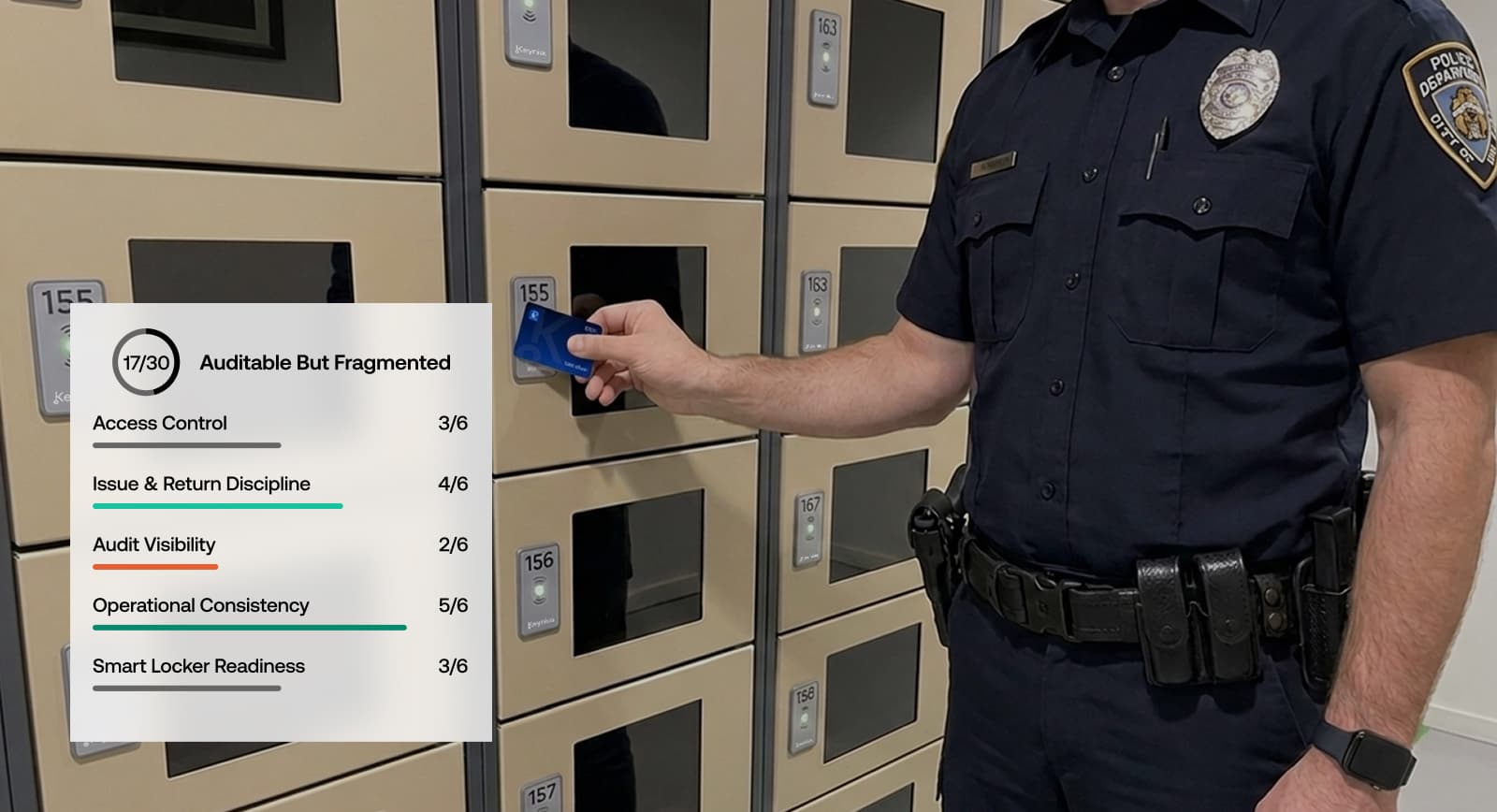
Summary
How to use the Secure Access and Evidence Control Assessment
This assessment helps police, emergency services, healthcare, pharmacy, and public-sector teams review how critical assets are issued, returned, stored, and audited. Start by selecting your organisation type and the assets or workflows you manage most often. The assessment then asks a short set of questions about access control, visibility, return discipline, audit trails, and operational consistency. Your result gives you a practical readiness score and a suggested next step. Use it to compare today’s process against a more controlled model with smart lockers, badge or RFID access, compartment-level permissions, and clear records of who accessed what and when.
What to review after your score
Use your score to identify where the biggest access risks sit today: open storage, shared keys, paper logs, unclear return ownership, delayed evidence handovers, missing PPE, unmanaged medication access, or assets spread across multiple sites. Then review which workflows need tighter control. Some assets may need named user access. Others may need role-based access, timed availability, charging, return alerts, or a full audit trail. Keynius can help translate those rules into a smart locker setup that fits your organisation’s daily workflow while improving accountability, availability, and compliance.
Find your secure access readiness score
Take the AssessmentSecure Access Assessment FAQs
What does the assessment measure?
It measures how well your organisation controls access to critical shared assets, including who can access them, how returns are tracked, how exceptions are reviewed, and whether the same process works across teams or sites.
Who is the assessment for?
It is designed for teams that manage secure or operationally critical assets, including police, fire and ambulance services, hospitals, pharmacies, logistics teams, and public-sector facilities.
Which assets should I consider?
Include any asset that creates risk, delay, or compliance pressure when it is missing, unavailable, or accessed without clear accountability. Examples include keys, evidence, PPE, radios, tablets, medication, controlled stock, tools, and shared operational equipment.
What happens after I complete the assessment?
You receive a readiness score and result category. The result helps show whether your current process is mainly manual, partially controlled, fragmented, ready for standardisation, or already well prepared for a smart access model.
Can the results help build an internal business case?
Yes. The score gives teams a simple way to explain where current access control is creating risk, wasted time, or weak accountability. It can support a first discussion about smart lockers, access rules, audit trails, and multi-site standardisation.
How can Keynius help after the assessment?
Keynius can help map your current workflows, define access and return rules, and recommend a locker configuration for secure storage, controlled pickup, charging where needed, and clear audit records.
Can this work across multiple stations, departments, or sites?
Yes. Multi-site teams can use smart lockers to apply consistent access, return, and tracking rules across stations, departments, workshops, pharmacies, evidence rooms, and operational facilities.


%201.svg)
%201.svg)
