
Everything has a shelf life. At Keynius, however, we are focused on exploring how we can continually extend that shelf life.
For smart lockers, that means designing systems that can be maintained, upgraded, refurbished, and adapted over time. For materials that might otherwise be discarded, it means finding valuable new applications.
Through CIRTEX 2.0, we are exploring how regional textile waste can become part of a new generation of circular smart lockers.
Co-funded by the European Union.
Creating a regional circular textile chain
CIRTEX 2.0 brings together around 11 local partners to create a shorter, more transparent textile chain in Rivierenland.
The region already collects and processes approximately 1.8 million kilograms of textiles from around 100,000 households each year. Textiles suitable for reuse can be returned to circulation through second-hand channels. Other materials are more difficult to reuse and risk being exported, incinerated, or otherwise losing their value.
CIRTEX 2.0 addresses this challenge by connecting textile collection, sorting, material development, and production. Its objective is to transform locally collected textile waste into consistent, scalable materials for practical new applications.
Building that chain requires every partner to contribute its own knowledge. Collection and sorting organisations help create reliable material streams. Material specialists develop new fibres, felt, boards, and composites. Product manufacturers then explore how these materials can perform in real-world applications.
From textile waste to circular material
With the help of our partners at Rezign, Keynius is helping bring these materials into a practical smart locker application.
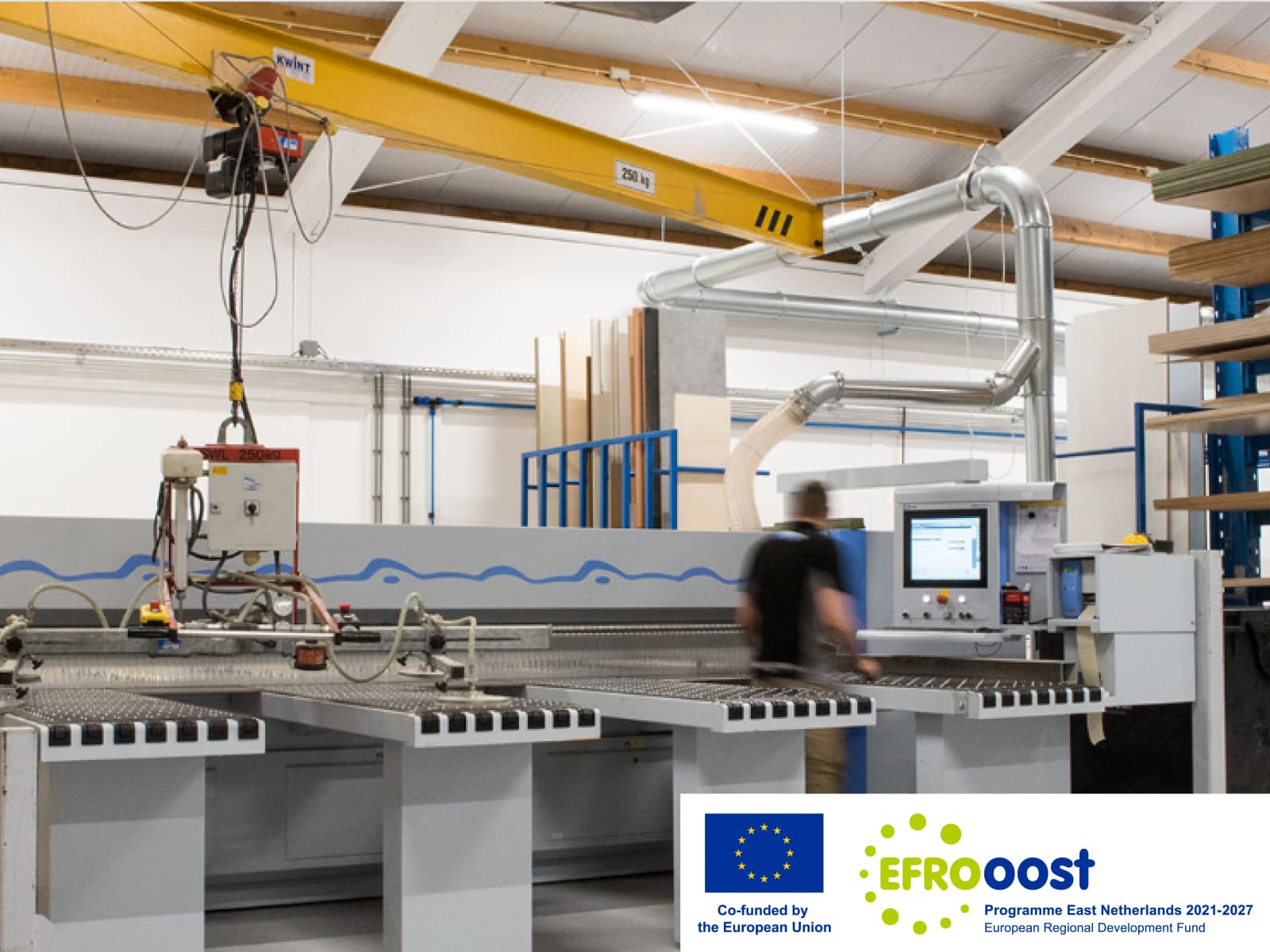
At the Rezign Factory, textiles are shredded, mixed, pressed, and tested. Different material combinations, recipes, and production methods are explored to understand how recovered textiles can become reliable materials for furniture and interiors.
The first results include solid textile boards made using recovered fibres and felt. These boards create a higher-value application for materials that might otherwise be lost.
The process remains experimental. Developing a consistent material from textile waste requires careful sorting, testing, adjustment, and validation. The Rezign Factory provides an environment in which the project partners can develop, test, learn, and gradually move from waste stream to scalable application.
Connecting CIRTEX 2.0 with SPHERE
This work directly connects with what we call SPHERE: Sustainable Principles for a Healthier Environment and Responsible Ecosystems.
SPHERE is our smart locker model designed around selected recycled textile and bio-based material options. Its name reflects the wider ambition behind the product: applying sustainable principles throughout material selection, product development, use, and eventual reuse.
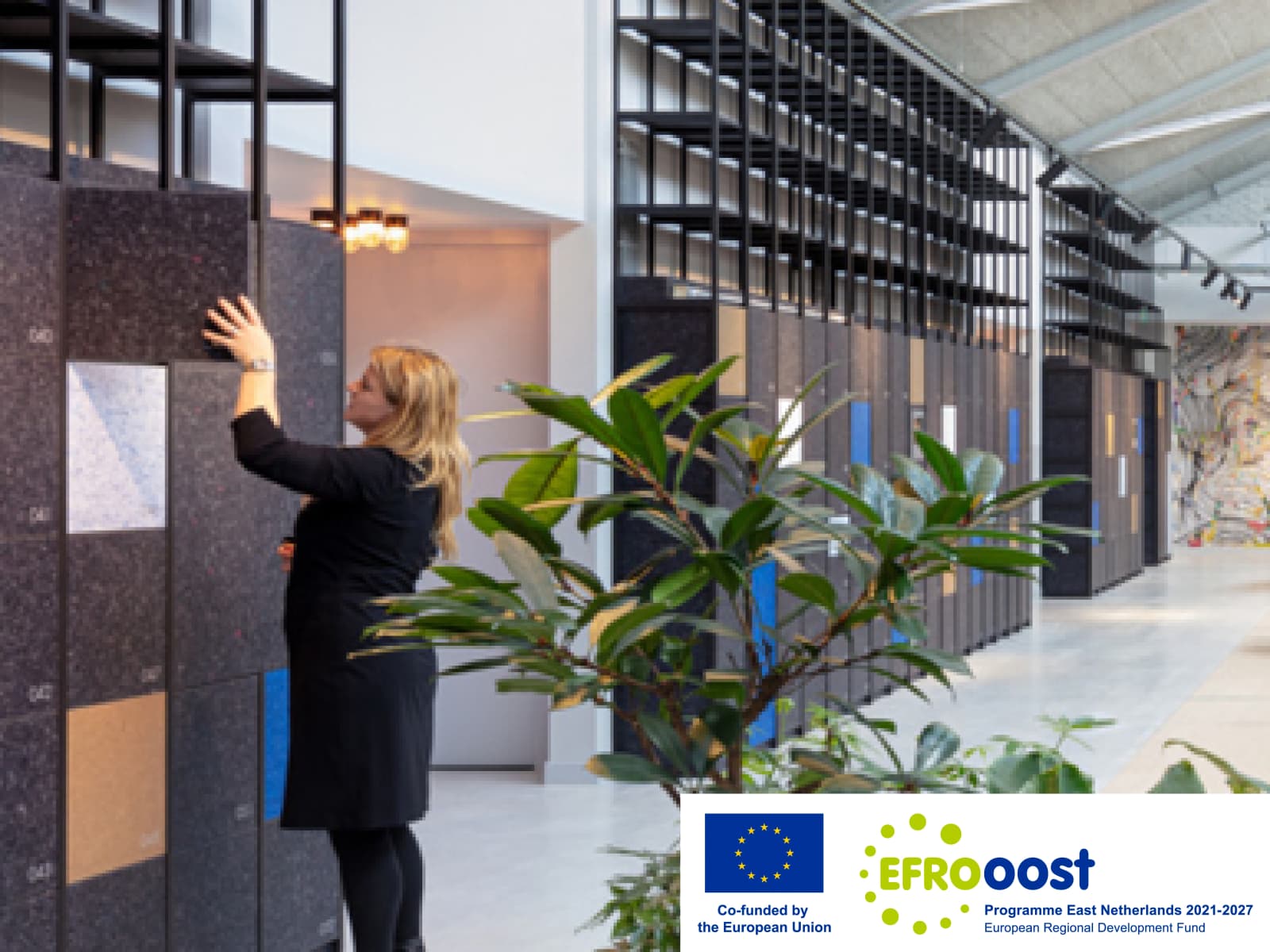
Through CIRTEX 2.0, we are exploring how solid textile boards developed by the project partners can be used as visible smart locker finishes. This could give recovered textiles such as denim, workwear, uniforms, and natural fibres a new role in functional interior products.
The materials and applications are still being developed and validated. We are therefore treating this as an active innovation programme, rather than presenting every application as commercially finalised.
Extending material life through software
Circularity is not only about the materials used to manufacture a locker. It also depends on how the product is managed throughout its working life.
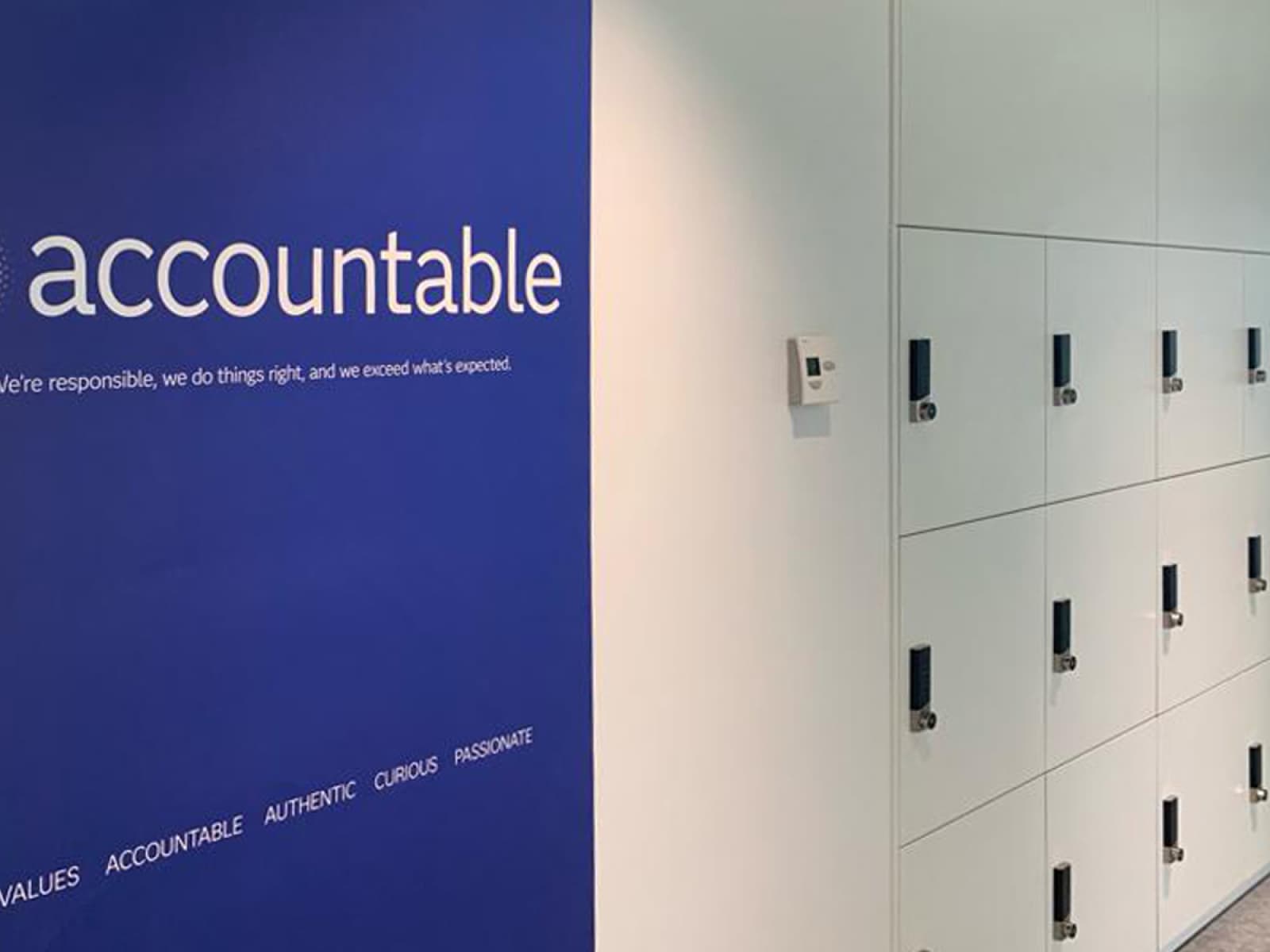
We are extending the Keynius software platform so each Locker Wall can have a product passport. This can make relevant information about its materials, configuration, maintenance, and lifecycle more accessible.
A product passport can support greater transparency and help inform future maintenance, refurbishment, reuse, and end-of-life decisions. Combined with circular service models such as Locker as a Service, it connects physical material innovation with the digital infrastructure needed to manage a smart locker over time.
Designing with consideration and purpose
CIRTEX 2.0 complements our wider approach to sustainability at Keynius.
That approach includes modular construction, replaceable components, software updates, maintenance, refurbishment, and the considered use of recycled or lower-impact materials. Together, these efforts help products remain functional and valuable for longer.
This project is still a work in progress, but it represents an important milestone for Keynius. It demonstrates what can become possible when regional partners connect material expertise, production capabilities, technology, and practical product development.
Most importantly, it supports our commitment to ensuring that everything we do is approached with consideration and purpose—for today, tomorrow, and the future.
Learn more
Project: CIRTEX 2.0 – De hogere stap op de textieltrap
Project reference: OOST-00135
Programme: OP Oost / EFRO Oost-Nederland
Funding acknowledgment: Co-funded by the European Union.
FAQ: Keynius and CIRTEX 2.0
What is CIRTEX 2.0?
CIRTEX 2.0 is a regional collaboration connecting textile collection, sorting, material development, production, and product applications. Its objective is to transform locally collected textile waste into consistent, scalable materials for practical new uses.
What is Keynius contributing to CIRTEX 2.0?
Keynius is exploring how solid textile boards developed through the project can be used as visible finishes for smart lockers. Keynius is also extending its software platform so each Locker Wall can have a product passport.
What does SPHERE mean?
SPHERE stands for Sustainable Principles for a Healthier Environment and Responsible Ecosystems. It is the Keynius smart locker model designed around selected recycled textile and bio-based material options.
Are the CIRTEX 2.0 locker materials commercially finalised?
No. The materials and locker applications are still being developed, tested, and validated. The project is moving from regional waste streams towards reliable, scalable, real-world applications.
How is CIRTEX 2.0 funded?
The development is supported by OP Oost and co-funded by the European Union under project reference OOST-00135.




%201.svg)
%201.svg)
