

Hotels deal with the same luggage pattern every day. Guests arrive before rooms are ready, leave after check-out, store bags between bookings, and expect the process to be quick, secure, and easy to understand. In many properties, that demand still gets handled through a back-room storage area, paper tags, and reception staff moving bags in and out by hand.
That model can work at low volume. It becomes harder to manage when guest turnover is high, staffing is tight, and the hotel wants to keep the front desk focused on service rather than luggage logistics. This is why more properties are reviewing whether a self-service luggage storage system or hotel luggage storage lockers can support the guest journey more effectively.
For hotels, the real question is not whether guests need luggage storage. They do. The question is how to offer hotel luggage storage in a way that reduces operational friction, protects belongings, and fits the property’s service model.
What hotel luggage storage problems look like in real operations
Early arrivals create demand before rooms are available. Late departures create a second wave after check-out. Leisure guests often want to leave bags for a few hours before heading to the airport or train station. Business travelers want a fast process that does not involve queueing or waiting for staff to unlock a storage room. Group arrivals can multiply the issue in a short time window.
In practice, this means reception teams are often dealing with luggage during the same periods when they are already under pressure from check-in, check-out, key issues, guest questions, and payment queries. Bags begin to accumulate behind the desk, in a back office, or in a shared luggage room. Staff rely on paper tickets, handwritten labels, memory, or shift handover notes to keep track of what belongs to whom.
When the process is informal, small mistakes become more likely. A guest cannot find a receipt. A bag is moved during housekeeping or maintenance activity. A team member has to leave the desk to retrieve luggage during a queue. Another guest is waiting while staff search the room for an item that should have been easy to locate.
This is the point where luggage storage stops being a minor convenience issue and becomes an operational workflow problem.
Why hotel luggage storage becomes difficult to manage
Guest demand does not match room availability
The first cause is timing mismatch. Guests need storage when they are not yet checked in or have already checked out, which means luggage handling sits outside the standard room-access model.
Luggage storage is still treated as an exception
Many hotels still treat luggage storage as an exception process rather than a designed service. It gets managed through spare space and manual work instead of a system built for repeated daily use.
Storage space is rarely planned around guest flow
Space planning also plays a role. Storage rooms are often placed wherever space was available, not where guest flow makes sense. That can create extra walking time for staff and poor visibility over who is accessing stored items. In some properties, the only workable option is to keep luggage in back-of-house areas that were never designed for self-service, auditability, or peak-hour turnover.
The digital guest journey often stops at luggage handling
Another cause is the gap between hospitality and infrastructure. Hotels have modernized mobile check-in, digital keys, and payment experiences, but luggage storage often remains one of the last manual steps in the stay. The result is an inconsistent experience: the guest can check in digitally, but still has to queue to hand over a suitcase.
Business impact
The impact is wider than a few minutes spent moving bags.
Staff workload increases
Manual luggage handling pulls staff into repetitive tasks that do not add much value. Tagging, storing, locating, and returning bags can absorb a surprising amount of front-desk time across the day. During peak windows, even a short handling task can slow the rest of reception activity.
Security and liability risks increase
When luggage is stored in shared rooms with manual tracking, the process depends heavily on consistent staff behavior. That creates avoidable risk. Hotels need to know who accessed a storage area, when a bag was dropped off, and how retrieval was authorized. Without a digital trail, proving what happened becomes harder.
Guest experience becomes less consistent
Guests do not judge luggage storage as a separate service. They judge it as part of the stay. If the process feels slow, unclear, or insecure, it affects the overall impression of the property. This is especially visible in high-turnover city hotels, airport hotels, and lifestyle brands that position convenience as part of the experience.
Operations become harder to scale
A manual process might be manageable in one property with stable staffing. It becomes much harder to standardize across multiple hotels, regions, or franchise locations. Training, service consistency, reporting, and loss prevention all become more difficult when every property runs luggage storage differently.
Revenue opportunities are often missed
Some hotels want luggage storage to remain a free amenity. Others want the option to charge for extended use, premium convenience, or non-guest access. Manual models make pricing, payment, and reporting harder to control. That limits flexibility even when demand is strong.
Common hotel luggage storage approaches
Most hotels do not move straight from a manual room to a smart locker system. They usually work through a few familiar approaches first.
Reception or bell-desk luggage handling
Staff take the luggage, label it, store it in a room, and return it later. The advantage is simplicity. It requires little upfront change and fits properties that provide a high-touch, staffed service model. The limitation is that throughput depends on staff availability. During rush periods, the process can slow down quickly.
Back-room luggage rooms with paper tags
Some properties use a designated luggage room and keep the process semi-structured with numbered tags or receipts. This can reduce ad hoc handling, but it still relies on manual verification and staff presence. It improves organization, but not automation.
Third-party off-site luggage storage
Hotels in city centers sometimes refer guests to external luggage storage providers. This reduces on-site handling but gives the hotel less control over convenience, service quality, and brand experience. It may be useful where space is extremely limited, but it does not solve the on-property storage need for many hotels.
Restricted self-service luggage rooms
Some newer models allow guests into a secured room through digital access, QR codes, or app-based workflows. This can work well when the physical room is suitable and the property wants to avoid installing locker banks. The tradeoff is that a shared room still creates item-level visibility challenges unless tracking, verification, and access control are robust.
Each of these approaches can work in the right context. Problems appear when the hotel needs more security, throughput, reporting, or independence from staff handling than the current model can support.
Where smart lockers fit in a hotel luggage storage system
Guests can store and retrieve luggage without staff handling every transaction
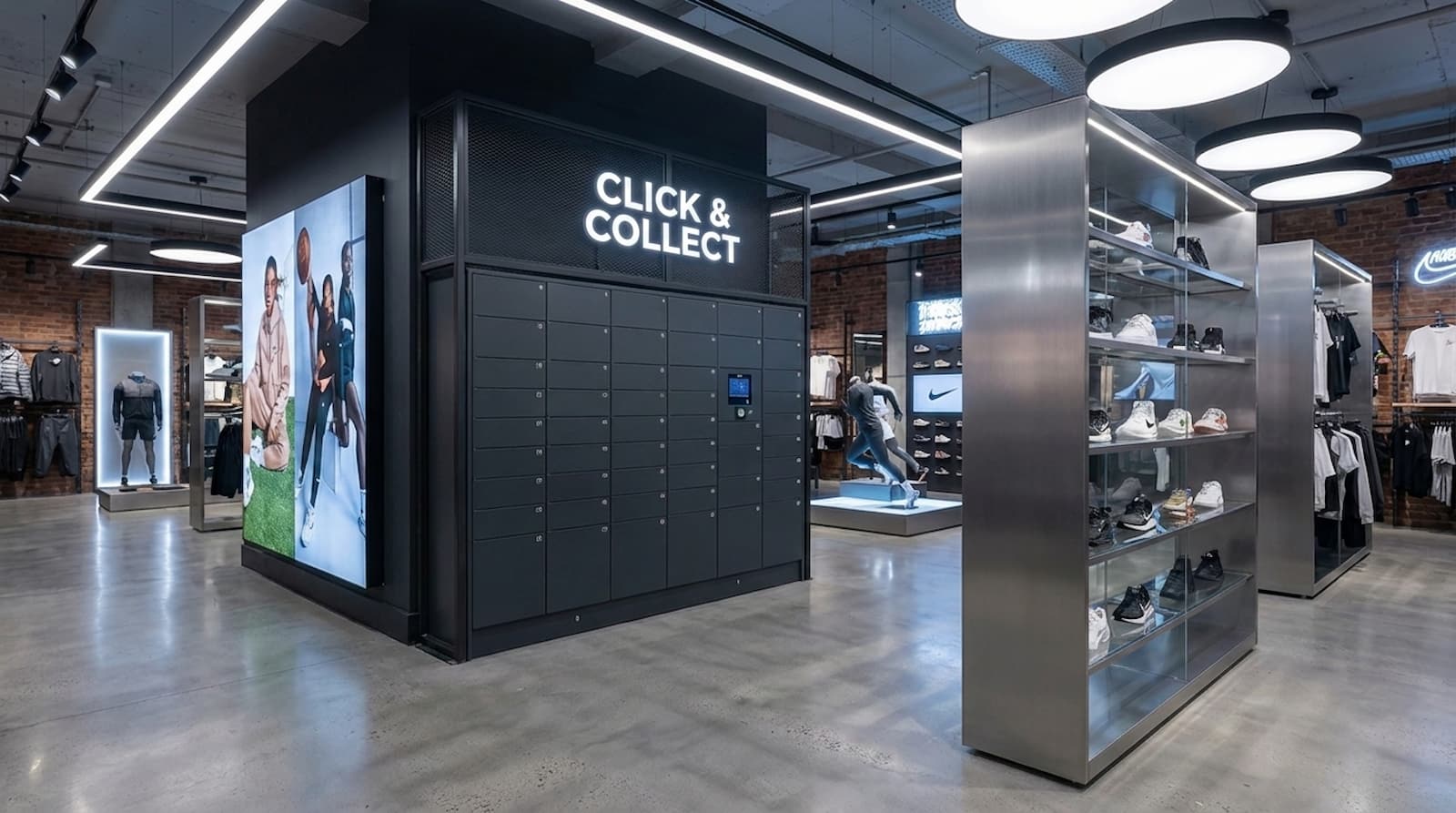
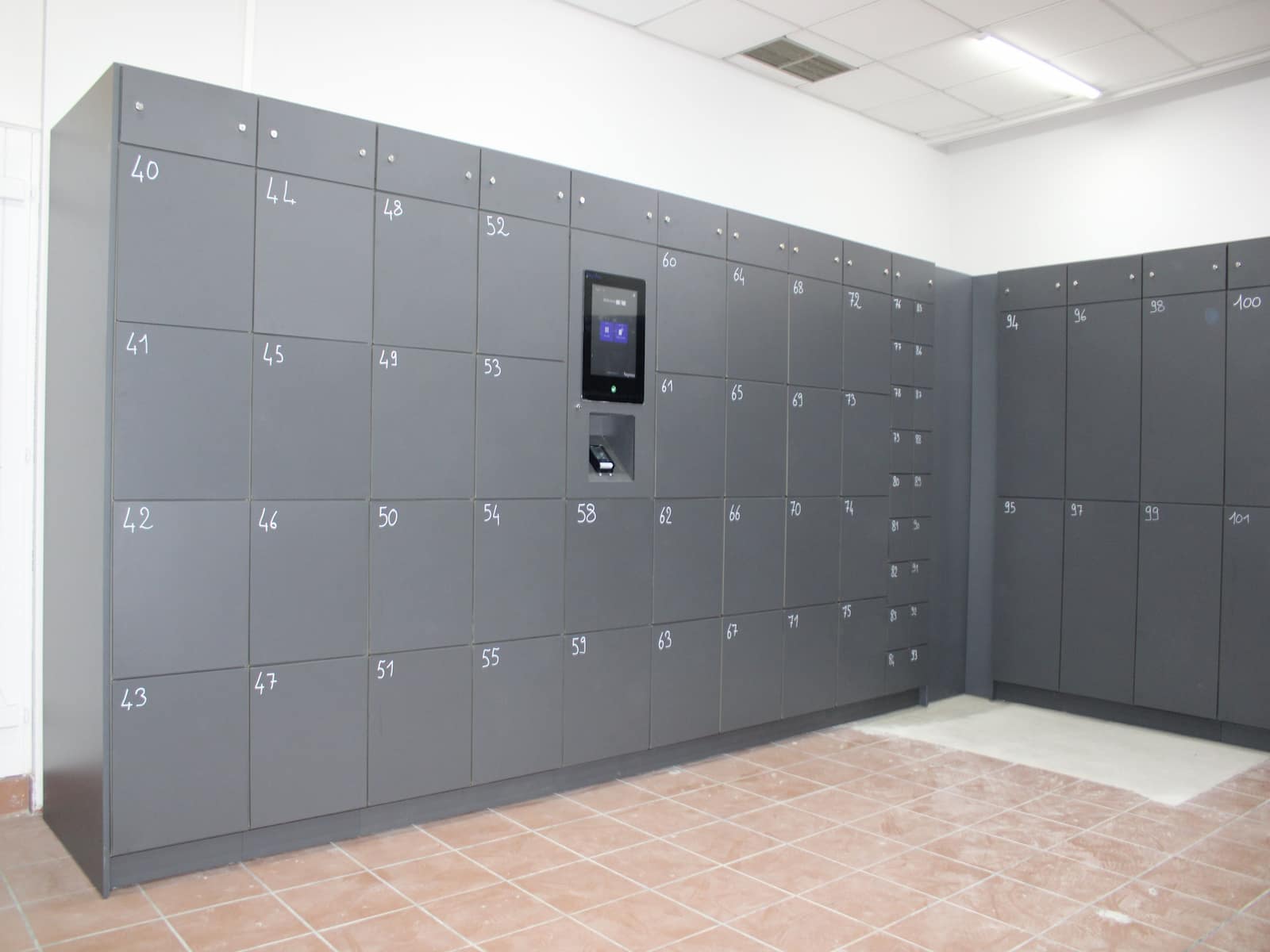
Instead of handing bags to reception, guests use a locker bank or digital storage interface to store and retrieve belongings independently. Access can be managed through PIN codes, QR codes, mobile credentials, RFID, or other authentication methods depending on the property model. Staff keep oversight through software rather than handling each storage event by hand. This gives hotels a more structured self-service luggage storage model than a shared room with manual claims tickets.
The hotel luggage storage process becomes more predictable and auditable
The storage process becomes more predictable. Access history becomes traceable. Retrieval no longer depends on finding the right staff member at the right time. Hotels can support 24/7 access where appropriate, reduce front-desk interruption, and create a more consistent experience across properties. For operators comparing hotel luggage storage lockers with manual rooms, this is usually the main shift in value.
The platform matters more than the locker door
For hotels that want this model, Keynius Pay & Store is designed to support secure, self-service guest storage with digital payments, remote administration, and flexible access methods. The platform can be used for short-term luggage storage, paid locker services, and guest-facing storage across hospitality environments. In practice, this means a hotel luggage storage system can be configured around the property’s operating model rather than forcing staff to adapt to a fixed workflow.
Existing deployments show how the model works in practice
Existing deployments on the Keynius site show how this can work in practice. In the CitizenM case study, the hotel used self-service lockers to reduce reception involvement and support round-the-clock guest access. In the Premier Inn Cologne case study, the system combined multilingual support, payment integration, and remote management. In the Ibis Hotel Geneva case study, Keynius connects operational efficiency with measurable usage and revenue outcomes.
Implementation considerations for self-service luggage storage in hotels
Deployment model and locker placement
Some properties need a dedicated locker wall in a visible guest area. Others need a more discreet setup near reception, in a lobby corridor, or close to check-in zones. The right model depends on guest flow, available space, and how prominently the hotel wants to present storage as an amenity.
Authentication and guest access
Authentication should match the guest journey. PIN access can be simple and familiar. QR codes can work well for mobile-first flows. RFID or room-key integration may suit properties with existing access infrastructure. The key point is consistency: the access method should feel like part of the hotel experience, not a separate system guests have to decipher.
Payments and pricing model
Not every hotel wants to charge for storage. Some use lockers as a service enhancement included in the stay. Others want to charge by time, locker size, or use case. A good platform should support both approaches so the hotel can decide whether luggage storage is a cost-saving convenience, a revenue stream, or both.
Integrations and property technology fit
Storage does not always need deep systems integration on day one, but it should not become another isolated tool. Hotels should assess whether the platform can connect with payment providers, guest messaging flows, access systems, or broader property technology over time.
Administration, reporting, and oversight
A self-service model still needs oversight. Staff should be able to monitor occupancy, view alerts, release lockers when needed, check access records, and understand usage patterns. This is where centralized administration becomes important, especially for hotel groups with multiple sites.
Scalability across hotel portfolios
What works in one urban property should be repeatable elsewhere. Hotels rolling out storage across a portfolio need flexible hardware configurations, standard operating controls, and a software layer that supports multi-site administration. This is where a platform approach matters more than a stand-alone locker installation.
Best hotel environments for this solution
Self-service luggage storage is especially relevant in hospitality environments with regular arrival and departure overlap, limited staff capacity, or a strong convenience proposition.
It is often a strong fit for:
- city hotels with heavy pre-check-in and post-check-out traffic
- airport hotels serving short stays and travel transitions
- lifestyle and tech-forward hotel brands that already promote self-service guest journeys
- hostels and aparthotels where staffing models favor automation
- mixed-use hospitality sites where storage can also support visitors rather than only overnight guests
The same operating logic also extends beyond hotels. It applies across hospitality and venue environments where visitor storage demand is temporary, time-sensitive, and difficult to manage manually.
Conclusion
Hotels do not need to treat luggage storage as an unavoidable front-desk burden. When the process is designed properly, a hotel luggage storage system can become a secure, low-friction service that reduces manual handling, improves guest flow, and gives properties more control over access and reporting.
The best approach depends on the property, the volume of demand, and whether the goal is purely operational efficiency or also paid guest storage. What matters most is moving from an improvised process to a structured one.
If your hotel is reviewing how to modernize guest storage, it is worth exploring how a smart locker platform can support self-service access, stronger oversight, and better use of staff time. You can learn more through the Keynius hospitality solutions pages, review the Pay & Store solution, or contact the team to see how different hotel luggage storage system models work in practice.





%201.svg)
%201.svg)
